
Giuseppe Restelli
Foundation
Via Carroccio 1
Rho (MI), Italy
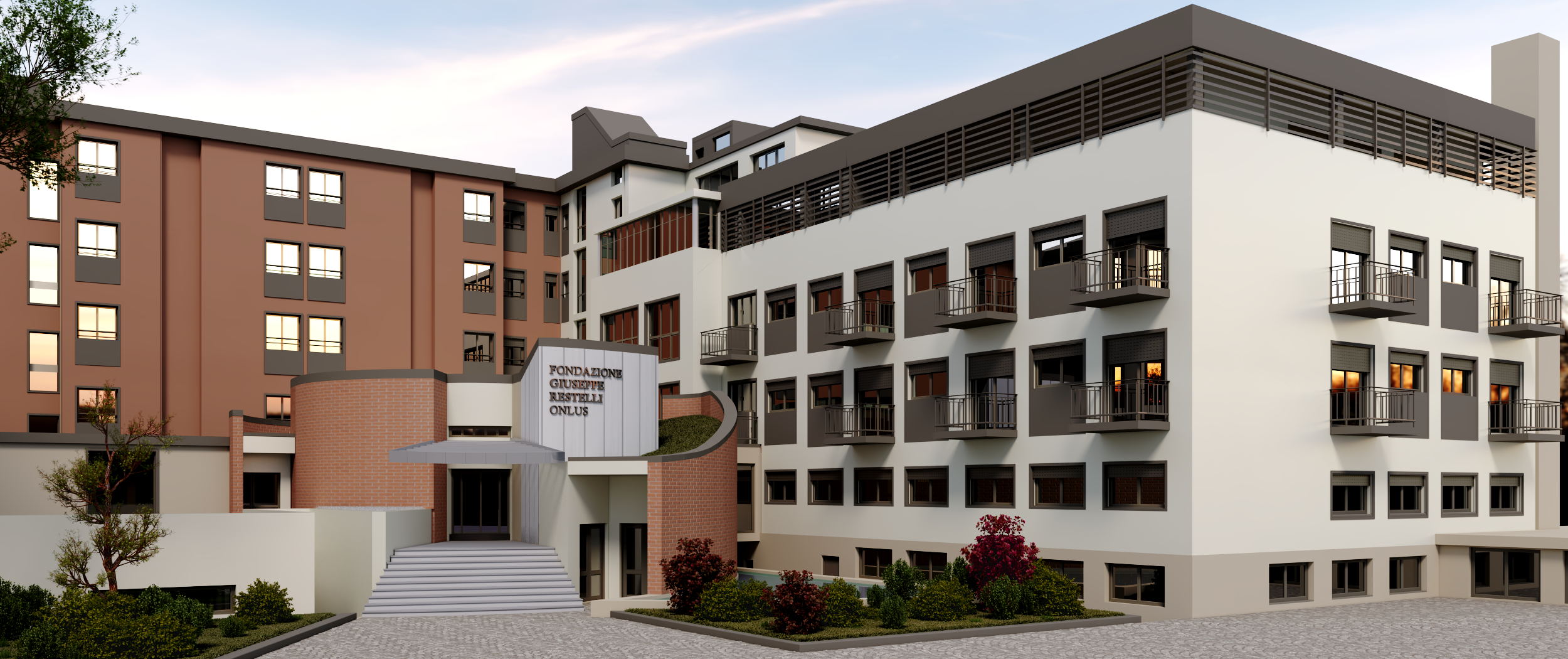
The complex of the Giuseppe Restelli Foundation, located in Via Carroccio 1 in Rho (MI), is an important social and health facility organized around a suggestive open internal courtyard. The building, which houses the delicate spaces of the Nursing Home (RSA), has been the protagonist of a profound intervention of energy requalification, plant efficiency and structural improvement, aimed at transforming the structure into a model of safety, sustainability and total accessibility.
The integrated design of MIR Solution has faced the challenge of combining a high level of technological innovation with the utmost respect for the continuity of care of the RSA. The engineering approach adopted has made it possible to raise the thermo-acoustic comfort of guests and staff, drastically reducing the environmental footprint of the complex and at the same time ensuring state-of-the-art seismic safety standards.
Key figures and results
Details of interventions
and technical solutions
Plant redevelopment and air treatment
The entire thermal hub has been revolutionized with the introduction of modern high-efficiency heat pump systems. The system manages winter heating, summer cooling, the production of Domestic Hot Water (DHW) and the air treatment system, which is essential for the indoor health and well-being of guests.
Green autonomy and energy storage
In order to reduce the complex's electricity consumption and encourage self-consumption of the renewable energy produced, a new photovoltaic system has been installed on the roof.
High-performance transparent envelope
The old windows and doors were replaced with new thermally broken aluminum windows and triple low-emissivity glazing. This significantly reduced heat loss from the transparent envelope, eliminating thermal bridges and improving the thermal and hygrometric comfort of the rooms.
Project Gallery
* Project renders displayed – Final photography coming soon.